
Overview
Shore Flow Plumbing was a different kind of challenge because there was no existing website to improve. The business was already real and active, but its public footprint lived mostly on Facebook.
That meant the problem was not just visual. It was structural. There was no owned destination for search, no clear service architecture, and no real place to shape a first impression outside of a social platform layout.
What the Current Online Presence Was Missing
A Facebook page can confirm that a business exists, but it cannot do the full job of a website. It is a weak place to explain services, a poor place to tell the company story, and an unstable place to build a lasting local brand.
For a plumbing company, those gaps matter quickly. Emergency work, water heaters, leak detection, and water treatment all deserve clearer landing points. So do location signals, contact paths, and the proof that helps a homeowner trust who they are calling.
There is also a credibility difference. On Facebook, the business appears inside someone else's platform. On a dedicated site, the business controls the tone, the order of information, and the way it introduces itself. That shift alone changes how established the company feels.
What the Website Concept Builds
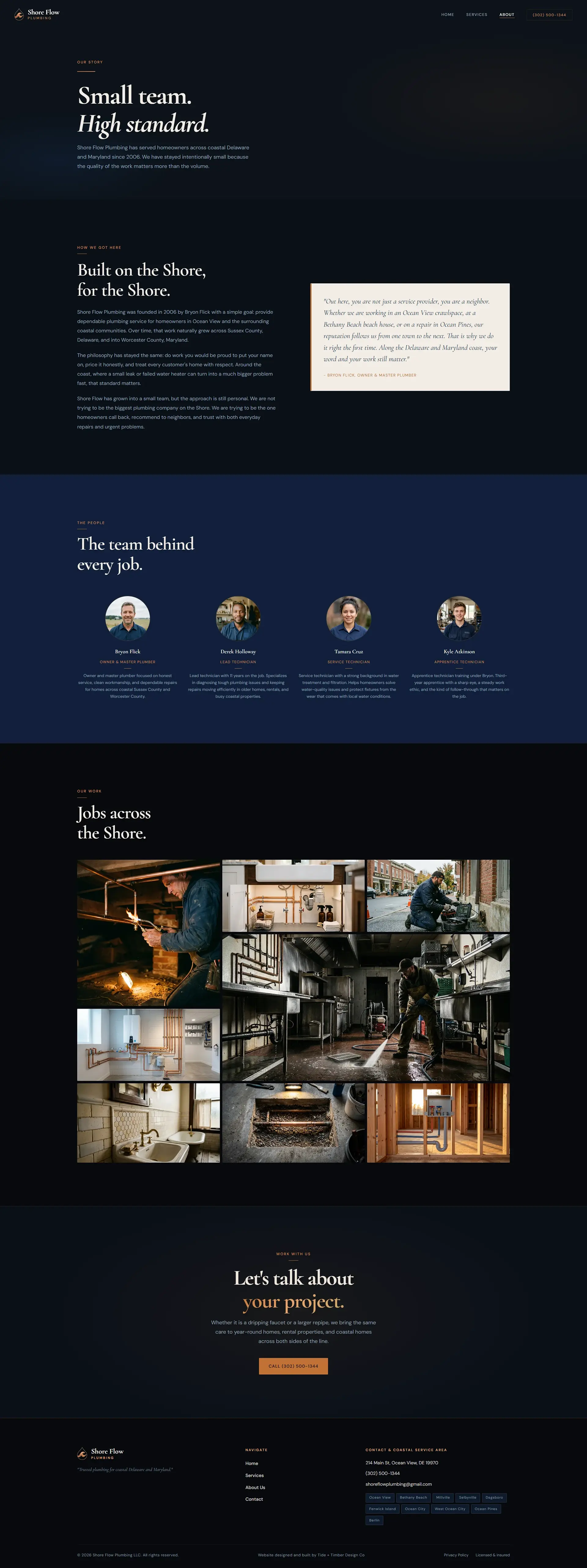
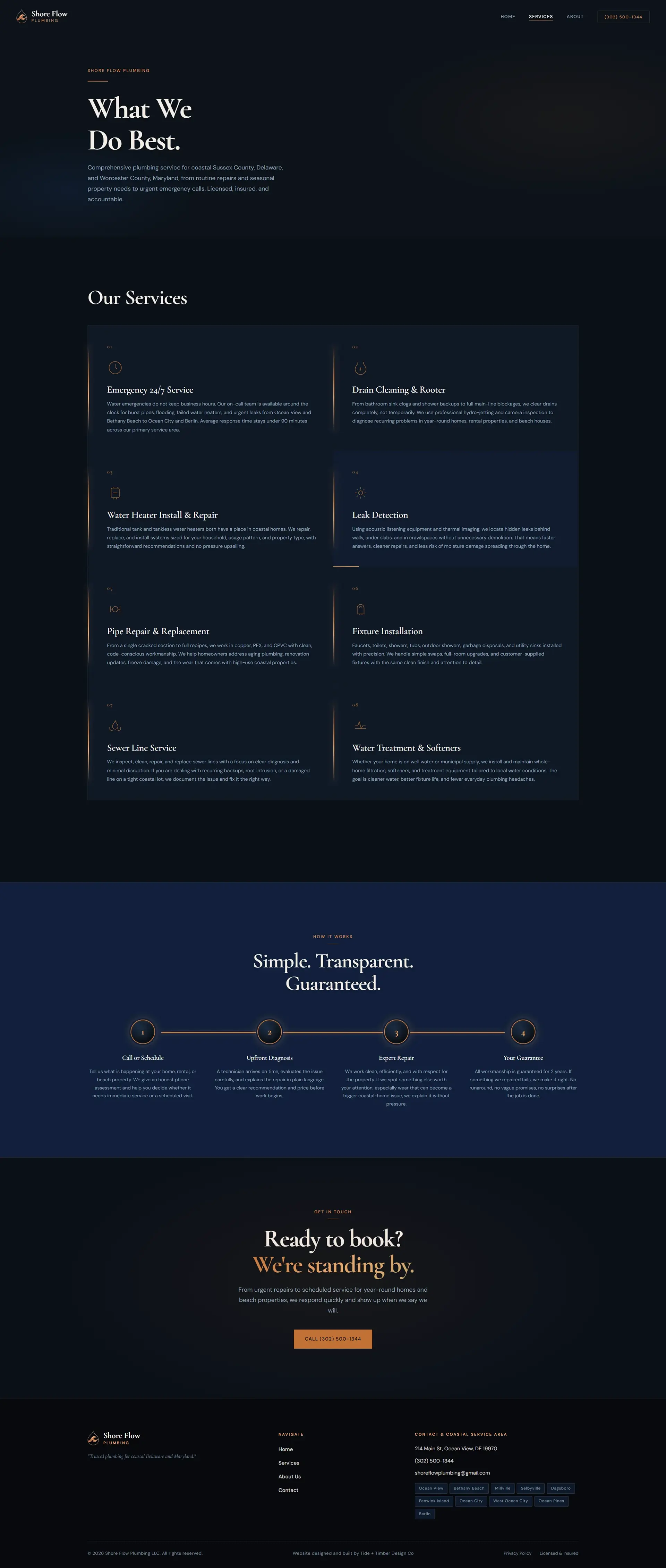
The concept starts from scratch with a new identity and a more deliberate tone. The homepage gives Shore Flow a real brand presence, clearer local positioning, faster CTA access, and a service overview that feels premium without becoming flashy for the sake of it.
It also goes well beyond a single landing page. The about page gives the business a story, a team, and a proof layer that makes it feel grounded in a real community. The broader site structure turns scattered business details into something customers can actually scan, understand, and trust.
That is what makes this example stronger than a simple facelift. It is brand creation, content structure, and local service positioning working together so the company feels like it has an actual operating footprint online.
Why This Example Stands Out
This is one of the clearest demonstrations of what design can do before a business has a true website in place. Instead of polishing a weak template, the concept creates the full foundation: identity, hierarchy, page structure, service framing, and a more memorable tone.
The visual direction is a big part of why it works, but the deeper value is that it gives a Facebook-only business a proper home online. That means a place to rank, a place to convert, and a place to present the company as more than just another service listing inside a feed.
That is the shift this example is meant to show: taking a business with real-world credibility but almost no owned web presence, and turning it into something that feels established, intentional, and built to grow.